
Textiles have long occupied an unstable position within the hierarchies of art and material culture. Historically relegated to the realm of the decorative, the domestic, or the utilitarian, fabric-based practices sewing, weaving, and garment-making have often been dismissed as secondary to “fine art” traditions rooted in painting and sculpture. Yet within Caribbean and Latin American contexts, textiles and garments carry a density of meaning that far exceeds their material form. They are repositories of memory, labor, migration, and survival. They hold the imprint of bodies and the rhythms of daily life. This layered relationship to material is inseparable from histories of colonialism, scarcity, and adaptation. Across the Caribbean and its diasporas, access to goods has been shaped by uneven economies and imposed dependencies, producing cultures in which objects are preserved, repurposed, and imbued with deep emotional and symbolic value. Clothing, in particular, becomes an archive: of care, of class, of gendered labor, of movement between geographies. To keep, mend, or pass down a garment is to participate in an intergenerational act of remembering.
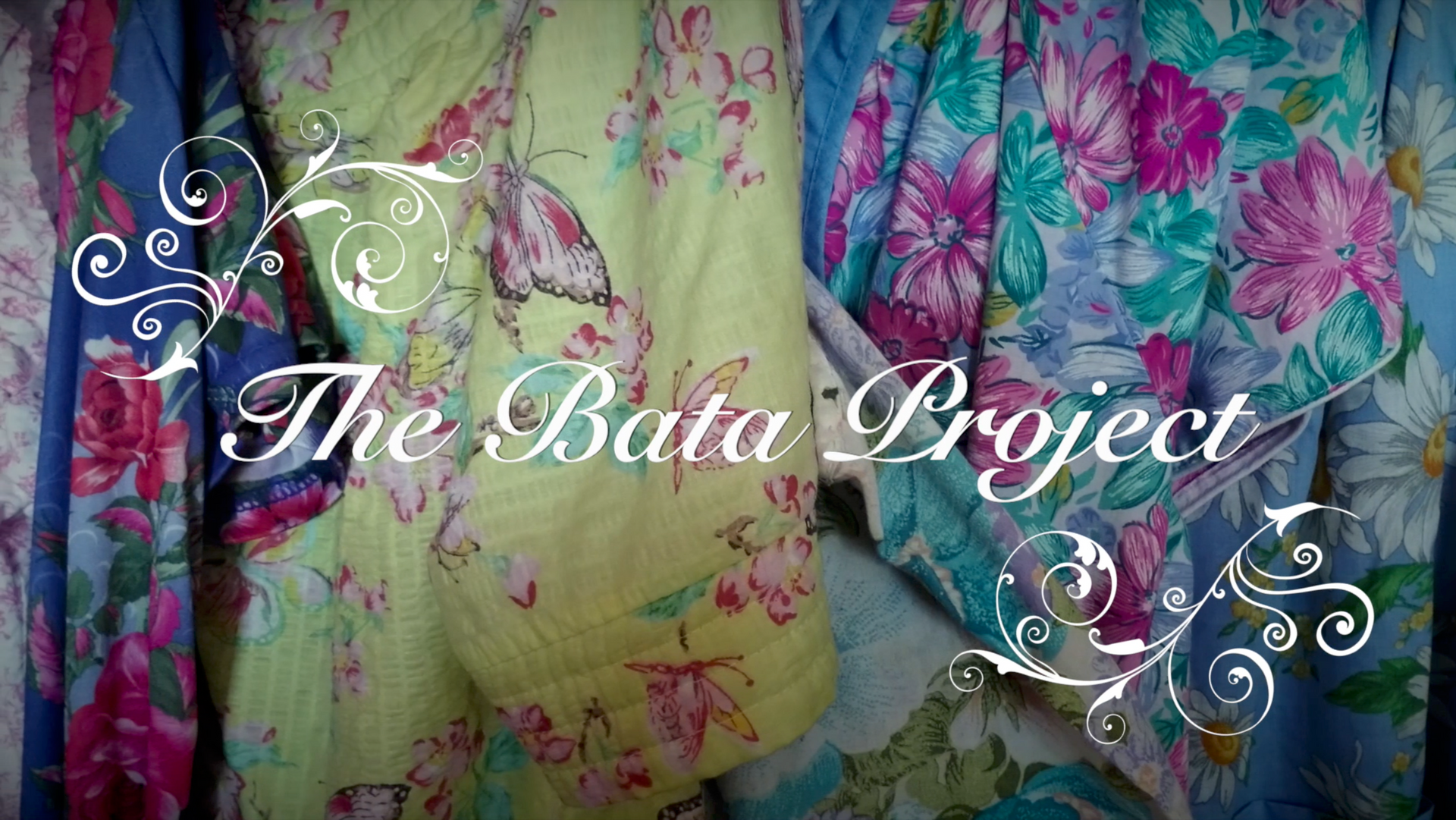
Within this context, la bata (the house dress) emerges as both a specific cultural object and a broader diasporic symbol. In Puerto Rican households, as in many parts of Latin America and the Caribbean, the bata is a loose, comfortable garment associated with domestic space and maternal presence. It is worn while cooking, cleaning, resting, tending to others; it marks the rhythms of the home. Often dismissed as informal or even unfashionable, the bata has historically been excluded from public visibility, confined to the private sphere and to the undervalued labor that sustains it. And yet, the bata holds a quiet authority. It is a uniform of endurance. It signifies a mode of being that is at once intimate and infrastructural; the unseen labor that maintains families, communities, and cultures across generations. In diasporic contexts, particularly in cities like New York, the bata also becomes entangled with narratives of migration and adaptation. It travels with the body, carrying with it the textures of the island into the urban landscape, creating a nostalgic feeling even as its use gradually recedes and becomes more folkloric.
It is precisely this tension between visibility and invisibility, between memory and disappearance that animates contemporary social practice in the Caribbean and Latin American diaspora. While socially engaged art has often been framed through Euro-American paradigms such as the relational aesthetics of Nicolas Bourriaud, artists and thinkers across Latin America have long advanced alternative frameworks rooted in the everyday, the collective, and the material conditions of lived experience. As articulated by Juan Acha, art extends beyond institutional boundaries to include the practices, objects, and cultural forms that shape daily life, particularly within contexts marked by colonial histories and economic precarity. Within diasporic and decolonial realities, social practice thus takes on a more urgent function. It becomes a strategy for cultural preservation, community-building, and the reactivation of suppressed or overlooked histories. It is not simply about participation, it is about survival, continuity, and the collective production of meaning. For these artists, the separation between art and life is not rigid, but open and flexible. Oral histories, gatherings, rituals, and shared actions become central mediums. The artwork is not a fixed object but an evolving process, shaped by the people who contribute to it. In this sense, social practice resonates deeply with Caribbean and Latin American traditions of communal knowledge-making, where storytelling, music, and embodied practices function as living archives.
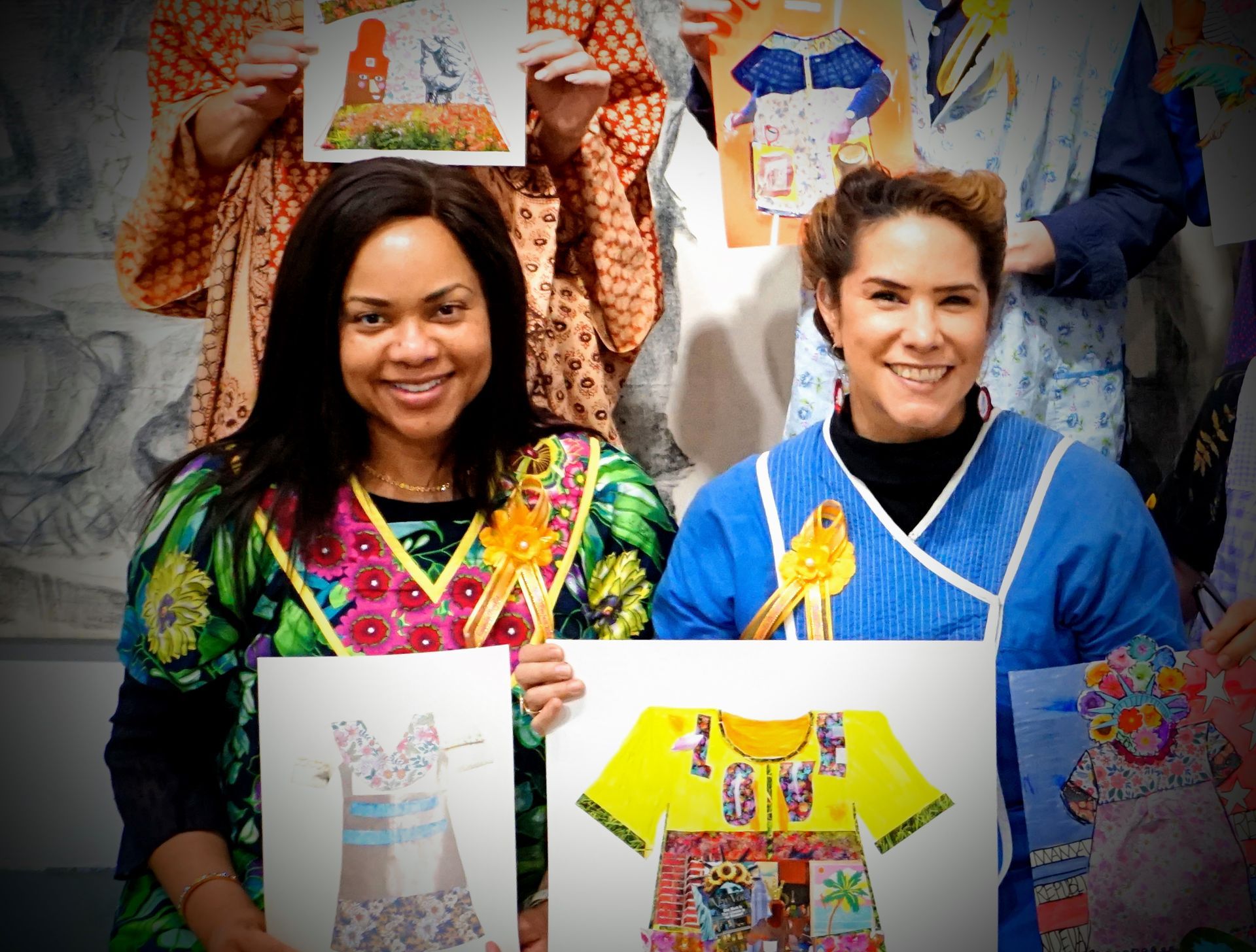
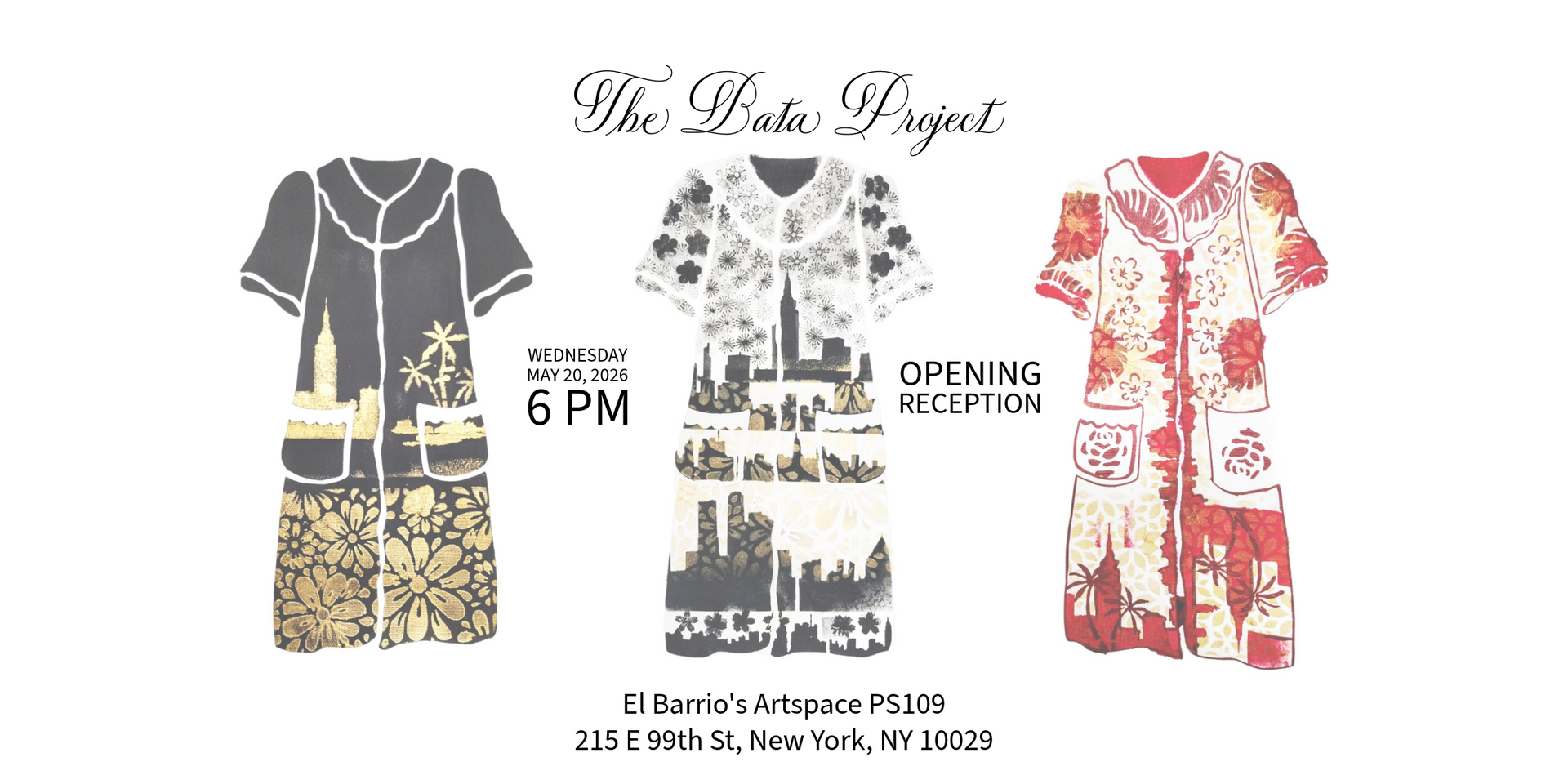
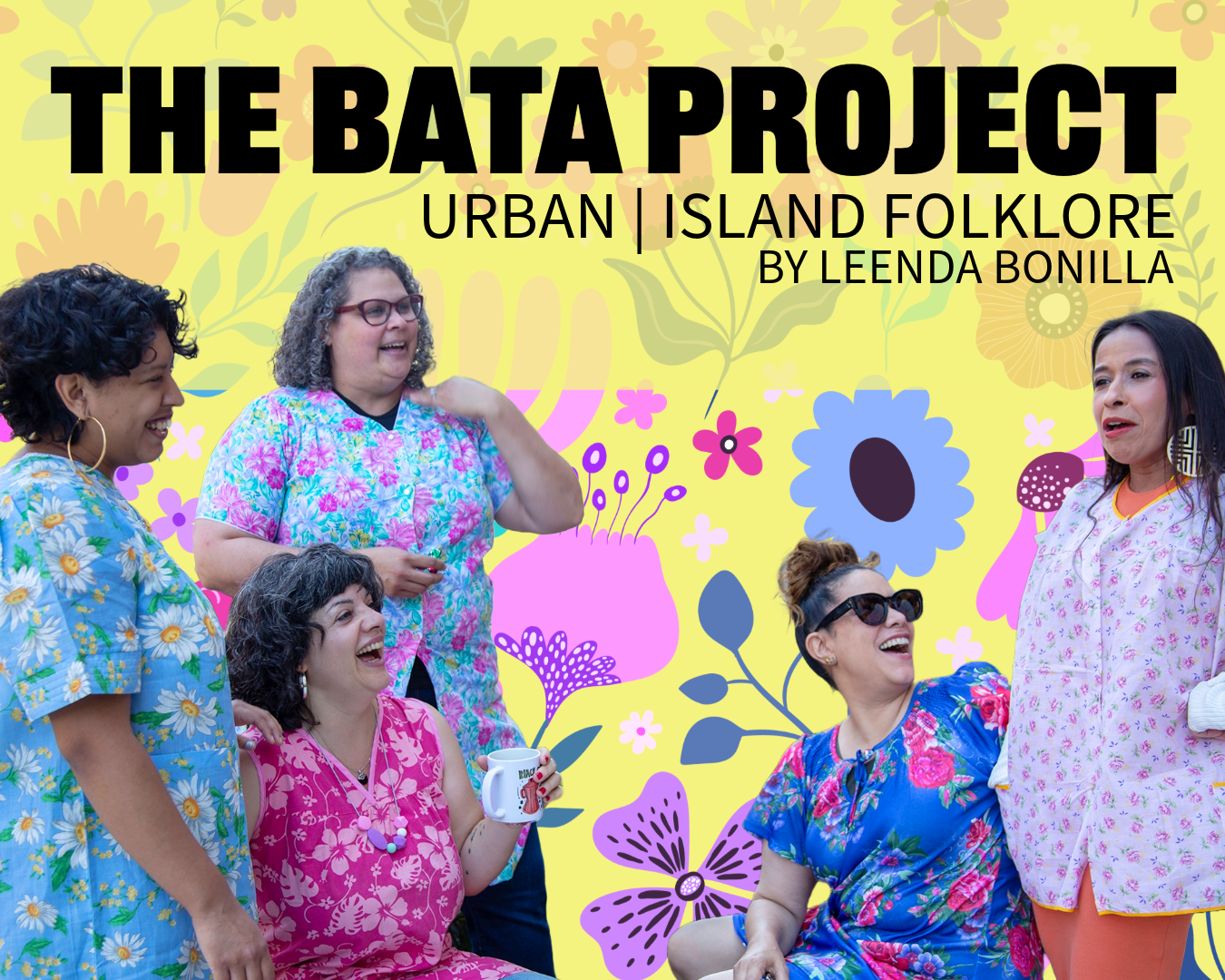
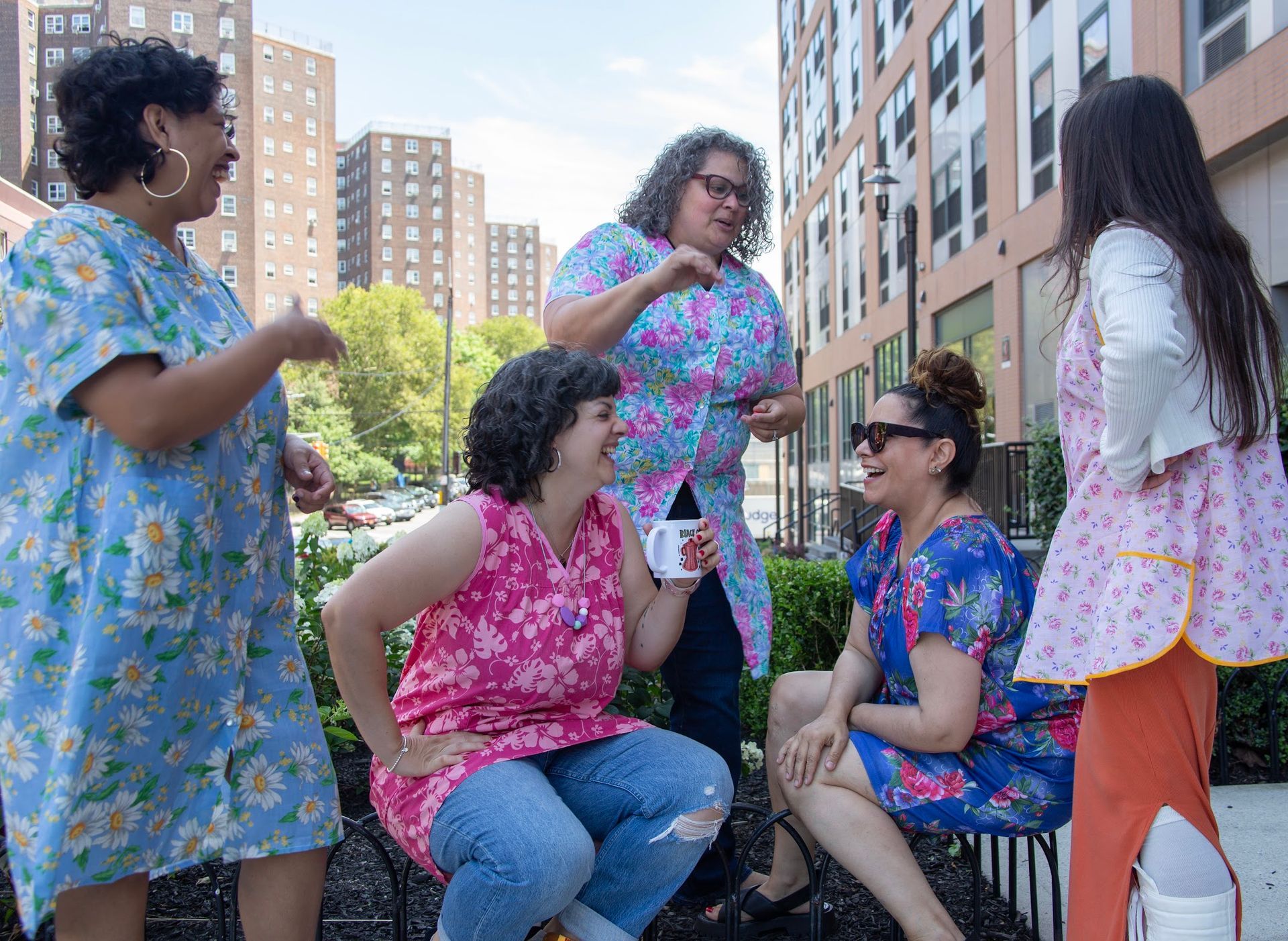
It is within this lineage that Leenda Bonilla’s The Bata Project shines. Originally conceived as a participatory public artwork, the project has evolved into a multidisciplinary body of work that bridges social engagement, performance, and material exploration. At its core is the bata itself, reclaimed, recontextualized, and reintroduced into public space. Through gatherings, performances, and installations across sites such as Art in Odd Places, the EFA Project Space Program, the Bronx Music Heritage Center, and Governors Island, Bonilla invites participants to wear their batas, share stories, and collectively inhabit a space where the private becomes public.
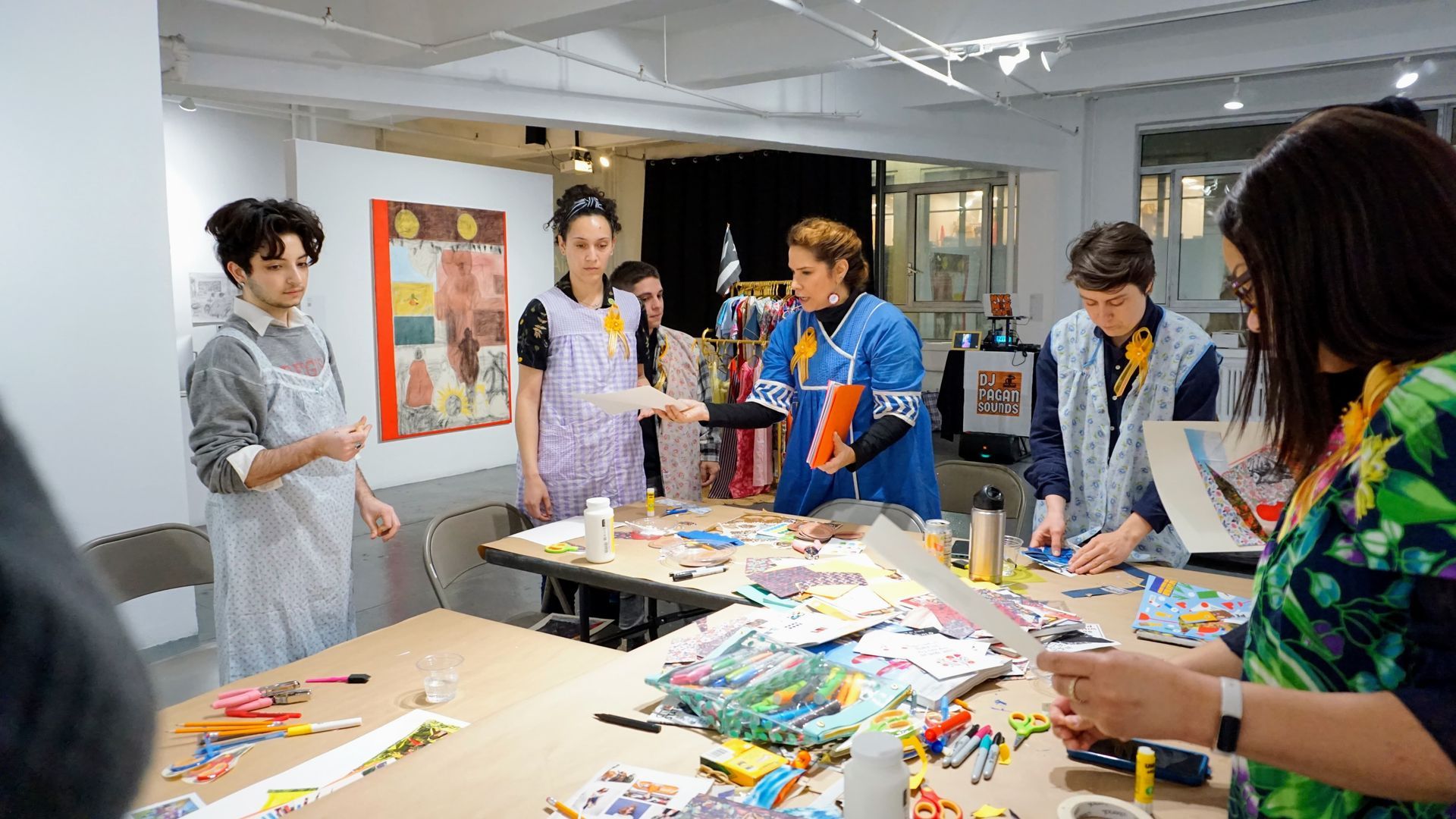
Central to this evolution is a series of workshops and collaborative gatherings through which Bonilla expands the project’s material and conceptual language. Practices such as mundillo, Puerto Rican bobbin lace, collage, printmaking, poetry, dance, and ceremonial exchange become integral to the work, positioning the bata within a broader ecosystem of cultural production. A key example of this approach took place during The Bata Project: Urban | Isla Folklore at EFA Project Space, a bi-weekly, open-to-the-public series that convened artists, educators, and community members. Working alongside facilitators including Elena Martinez, Peggy Robles-Alvarado, Carlos W. Encarnacion, Rokafella, and Rhina Valentin, Bonilla cultivated a space where participants engaged the bata through making, storytelling, movement, and reflection. These sessions foregrounded process over product, emphasizing exchange, collective authorship, and intergenerational dialogue as central to the artwork’s formation. In inviting peers, collaborators, and the public into the work, Bonilla positions the project not as singular authorship, but as a shared and evolving cultural construction.
This gesture is deceptively simple but conceptually profound. By bringing the bata into the street, Bonilla subverts the social codes that have historically confined it to the home. Participants across generations and cultural backgrounds activate the bata as a living symbol, connecting personal memory to broader diasporic narratives. The project flows iteratively, expanding through word of mouth and communal participation, mirroring the very networks of care and connection it seeks to honor. A pivotal expansion of this work emerged through a residency at Governors Island, where Bonilla deepened The Bata Project through an interdisciplinary and socially engaged framework. Inviting Puerto Rican and diasporic creatives to collaborate, she explored the bata not only as a garment, but as a point of entry into shared cultural memory and transnational dialogue. Within this context, the bata revealed itself as both culturally specific and universally legible, known across communities as the housecoat, duster, smata, or bijama, a garment that circulates across geographies while retaining intimate ties to home.
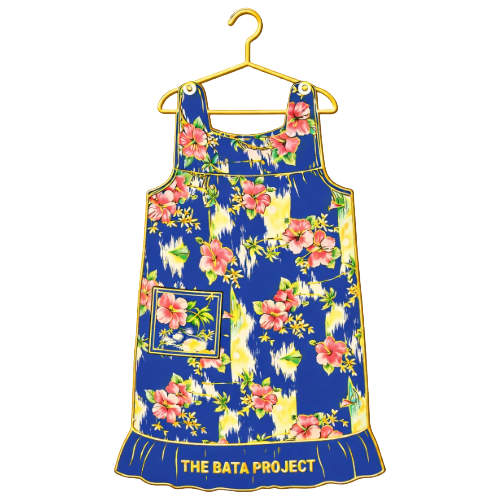
Through a series of workshops and gatherings, Bonilla expanded the project’s material and conceptual language. Practices such as mundillo, Puerto Rican bobbin lace, collage, printmaking, poetry, dance, and ceremonial gathering became integral to the work, positioning the bata within a broader ecosystem of cultural production. These sessions foregrounded process over product, emphasizing exchange, storytelling, and collective authorship as central to the artwork’s formation. During this period, Bonilla also explored the symbolic resonance of color, red, yellow, black, and white, and how these tones intersect with the Puerto Rican diaspora and her own ethnographic lineage. These colors, present across Indigenous cosmologies, Yoruba and Bantu spiritual systems, and Catholic traditions, informed the evolving visual language of the project, suggesting the bata as a site where multiple cultural and spiritual histories converge within both urban and island contexts. Incorporating vintage and sourced batas, from personal archives, travels in Puerto Rico, and contributions from family and community, Bonilla engaged processes of repair and reconstitution. The integration of gold as a material gesture, informed by philosophies akin to kintsugi, reframes the garment as a site of healing, where fragmentation and continuity coexist. In this way, the bata accumulates not only histories of wear, but also acts of care, restoration, and renewal.
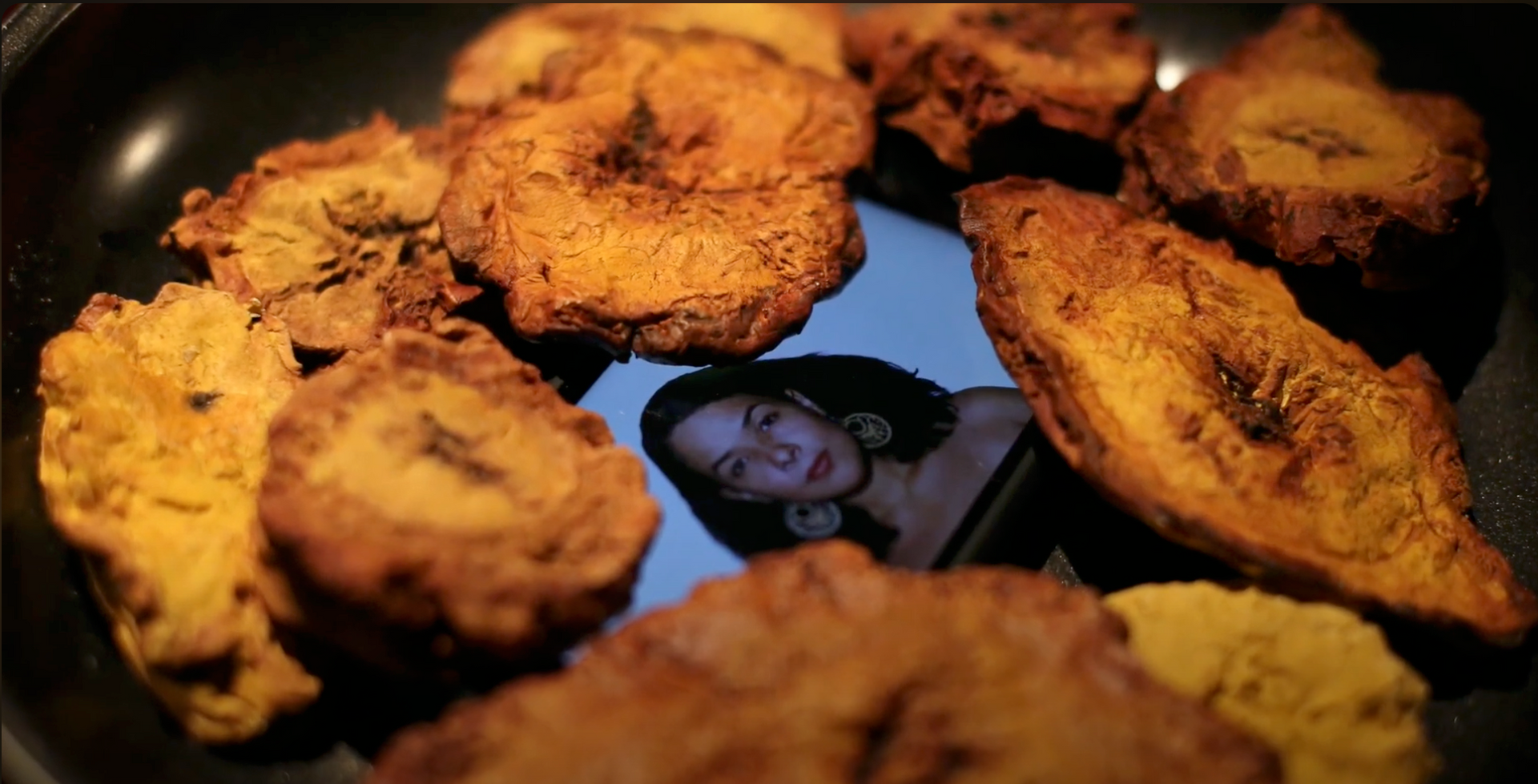
At the same time, The Bata Project remains grounded in Bonilla’s interdisciplinary practice. Traces of photography, assemblage, graphic design, and installation are embedded throughout the work. Documentation, through photo and video, functions as both archive and extension, capturing ephemeral moments while translating them into visual form. The garments themselves operate as sculptural elements, accumulating gestures and narratives over time. The project moves fluidly between mediums, resisting fixed categorization and reflecting the artist’s multifaceted trajectory.
Bonilla’s practice is further informed by her longstanding work as a cultural producer and advocate within New York City’s arts and civic landscape. Her engagement with community is foundational, shaped by years of organizing, collaboration, and institutional involvement. This dual role, as artist and facilitator, enables her to construct spaces that are both intentional and open-ended. In its transition from a series of public activations to its first solo exhibition format, The Bata Project takes on a new dimension. The gallery becomes a site where documentation, material, and memory are converging, where the traces of past gatherings are assembled into a constellation of images, objects, and narratives. It remains, fundamentally, a living project, one that continues to evolve with each iteration and each participant who enters into its orbit.
Ultimately, The Bata Project asks us to reconsider what is deemed worthy of attention, preservation, and display. It centers a garment that has long been overlooked and, in doing so, foregrounds the labor, care, and histories it represents. It insists that the domestic is not separate from the political, that the intimate is not separate from the collective. It reminds us that culture is not only produced in institutions or formal spaces, but in kitchens, in living rooms, in the everyday gestures that sustain life. To wear the bata in public, within this context, is to carry the home with you to honor those who came before, and to make visible the structures of care that continue to shape diasporic existence.
Andrea Sofía Matos
Independent Curator, Writer & Arts Administrator